
Advanced Recycled Plastics and Lightweight Engineering Plastics: A Win-Win Path to Carbon Reduction and Cost Efficiency
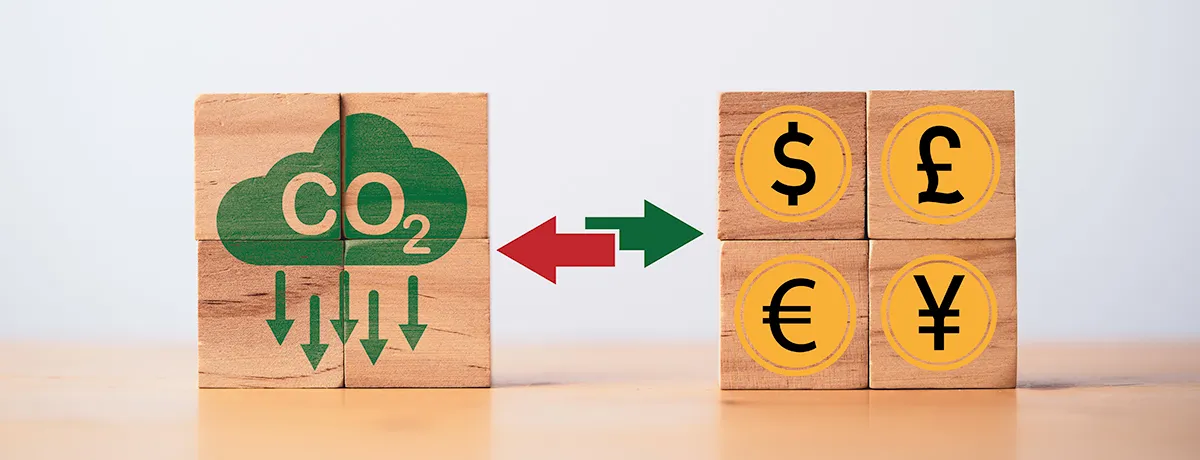
Driven by the dual pressures of global carbon reduction goals and cost control, enterprises urgently need to achieve green transformation and efficiency enhancement. The application of high-quality recycled plastics and lightweight engineering plastics has emerged as a proven strategy for businesses to maintain profitability without sacrificing product performance.
Dual-Engine Drive: New Breakthroughts in Carbon Reduction and Cost Efficiency
• Reducing Carbon Without Increasing Costs:
Through precise sorting, purification, and modification, advanced recycled plastics can now match the performance of virgin materials, and shorten injection/extrusion molding cycles by 5% to 12%. High-quality recycled plastics have achieved an addition ratio of 50% to 100% in end-products such as non-appearance parts, structural parts, and interior frames, further lowering carbon emissions. Moreover, with virgin material prices soaring due to geopolitical conflicts, the global average price of many recycled plastics has become lower than virgin materials. This allows enterprises to sustain profitability in highly price-sensitive environments. SINOPEC (Beijing Research Institute) has significantly enhanced the mechanical properties of plastic products by restructuring the molecular chain arrangement and microstructure of recycled plastics. These products demonstrate performance metrics that markedly surpass those made of virgin plastics. Teijin's proprietary solvent-based recycling technology dissolves and purifies used PC resin, restoring it to a quality equivalent to virgin resin. Wankai New Materials and the French biotech company Carbios's joint venture plant utilizes revolutionary bio-enzymatic depolymerization technology to precisely break down PET waste into high-purity monomers—terephthalic acid (PTA) and monoethylene glycol (MEG)—without the use of any solvents. This technology has received official clearance from the US FDA.
• Cost-Reduction via Structural Lightweighting
Bio-based high-temperature PA and carbon/glass fiber-reinforced engineering plastics are gaining traction for maintaining exceptional mechanical performance and thermal limits while aligning with green trends. Processing technologies for high-performance engineering plastics and composite materials have seen repeated breakthroughs—such as in-situ continuous fiber composite manufacturing and ""integrated injection molding"" (also known as thermoplastic composite overmolding). ENGEL's organomelt process enables the injection molding of continuous-fiber thermoplastic sheets, while KraussMaffei's FiberForm process facilitates automotive lightweighting. BASF's Ultramid® LIGHT S Series (glass-bead reinforced PA) is designed for next-gen consumer electronics, drones, and robotics. It offers an outstanding stiffness-to-weight ratio and creep resistance for deep lightweighting. Covestro's lightweight PC vehicle windows, paired with Baysafe® BEF battery potting foam, address critical material challenges for the AirCab flying car (eVTOL), helping it fly farther and safer. Sinochem's StarAir® modified foamed PPE achieves a UL94 V-0 (3mm) flame retardancy rating while combining high strength and impact resistance. It is ideal for battery enclosures and insulation boards, boosting safety and range.
Advanced recycled and lightweight plastics are the ultimate assets for balancing sustainability with profitability. Those who master these materials first will secure their profits through economic cycles. CHINAPLAS 2027 gathers the world's leading plastics and rubber technology suppliers to bring you innovative tech and premium alternatives. It is a tech feast industry leaders cannot afford to miss.

Related Products
Related videos
Industry News
BASF (CHINA) CO., LTD.
Ultramid® LIGHT S Series – lightweight solutions are BASF's latest glass bead reinforced PA solution designed for next‑generation lightweight structural parts in consumer electronics, drones, and robotics applications. It features an optimized glass bead architecture that delivers superior stiffness‑to‑weight ratio, outstanding toughness, improved weld‑line performance, and excellent creep resistance, enabling replacement of metal or heavier engineering plastics.Compared with conventional PA‑GF materials, Ultramid® LIGHT S series with density lower to 0.77-0.95 g/cm3, offers up to 20–40% weight reduction, better flowability for thin‑wall molding, enhanced surface aesthetics, and greater design freedom. It enables manufacturers to reduce system cost through part consolidation, lower material usage, and improved processing efficiency.
For end‑users, Ultramid® LIGHT S series contributes to energy efficiency, extended battery range (for smart glasses & drones), reduced CO₂ footprint, and longer component lifetime. Its reliable mechanical performance under dynamic load conditions makes it an ideal choice for structural brackets, housings, drone components, and precision mechanical parts.
TOMRA SORTING TECHNOLOGY (XIAMEN) CO., LTD.
Achieve new heights in sorting accuracy with GAINnext™ – a complementary technology to our world-class AUTOSORT™ machine.This intelligent sorting system combines sensor-based material identification and AI-based object recognition for outstanding performance.
With its integrated sensor data and deep learning algorithms, recyclers benefit from even higher purity results.
SHANDONG GUANGYIN NEW MATERIALS CO.,LTD.
PA610 has excellent mechanical properties, high tensile and impact strength, and is wear-resistant. It has good thermal stability and chemical corrosion resistance. Its moisture absorption is moderate and it has good processing performance. It is often used in automobile manufacturing, such as interiors and oil pipes; casings and connectors of electronic and electrical appliances; and gears and ropes in the industrial field. It contains 63% bio-based materials.
KRAIBURG TPE TECHNOLOGY (M) SDN.BHD.
KRAIBURG TPE presents its THERMOLAST® R RC/UV/AP series for safer, durable and sustainable car pillar applications.KRAIBURG TPE's THERMOLAST® R RC/UV/AP series delivers strong, sustainable performance for A, B, and C car pillars. With 15-40% PCR content and full recyclability, it supports circular automotive solutions. Its 50-90 Shore A hardness range ensures the durability and versatility needed for structural components.
The RC/UV/AP series is ideal for durable automotive exterior parts with proven UV and weather resistance from a two-year Florida test. It ensures long-term appearance and offers thermal stability up to 90°C.
The RC/UV/AP series offers excellent adhesion to PP for seamless multi-component processing. Its low-density, injection-moldable formula supports lightweight designs that boost fuel efficiency. Available in sleek black, it blends smoothly with vehicle aesthetics.
INTCO RECYCLING
INTCO Recycling uses high purity separation, bottle to bottle washing, high impurity removal rate and other advanced technologies, can produce food grade R-PET pellets, impurity content less than 30ppm, purity up to 99.95%. GRS approved, 100% post-consumer recycling, meet FDA and EFSA food grade certification. The SSP technology in the regeneration process enables R-PET pellets to be used in food-grade plastic packaging industry (cups, tableware, beverage bottles, etc.), electronics industry, automobile industry, etc
Daicel Group
This cellulose is a renewable, inedible biomaterial that is at no risk of ever running out. Also, by incorporating this cellulose into resin as a reinforcing material, the CO2 emissions over the entire life cycle of the product can be reduced. It further contributes to reduced CO2 emissions thanks to the greater fuel efficiency achieved when it is used to lighten the parts of vehicles.Advantages of long cellulose fiber reinforced thermoplastics
• Able to reduce CO2 emissions over the entire product life cycle.
• Contributes to reduced usage of petroleum-based materials.
• Because cellulose fibre of stable quality is used, there is less likelihood of gas production during the fabrication process compared with natural fibre reinforced resins, resulting in products of a stable quality.
LEHVOSS (SHANGHAI) CHEMICAL CO., LTD.
LUVOCOM® PEEK is the ideal material for handles and instruments. Compared with metallic solutions, it offers exceptional haptics and weight reduction. Its outstanding chemical resistance opens up a wide range of design options in terms of component quality, durability, design and color.
QINGDAO ZHONGXIN HUAMEI PLASTICS CO., LTD.
1. High strength: The component of carbon fiber can determine the strength of the material, which is no less strong than metal, and can replace aluminum alloy, copper, steel, etc.2. Lightweight: It is now widely used in the automotive industry, unmanned aerial vehicles, electronic appliances and other product fields that require high-strength lightweight materials.
3. Conductivity: It can be seen that the conductivity is to the power of three, which is a conductive material.
4. The scope of application is relatively wide, in the automotive industry, unmanned aerial vehicles, electronic appliances and other fields.
FSPG HITECH CO., LTD.
Thin film products are mainly divided into high permeability, medium permeability, low permeability, polyester film regeneration, and nylon high permeability regeneration series. The products have advantages such as ultra softness, ultra-light thinness, and resistance to high and low temperatures. The thinnest can be made up to 3 microns, and the temperature resistance range is -50 to 230 degrees Celsius; According to customer requirements, personalized features such as hydrolysis resistance and flame retardancy can be added, or colors and prints can be changed.The environmentally friendly recycled polyester film and bio based nylon film series have ultra-high moisture permeability, and have the same characteristics as conventional films. They have functions such as super flexibility, super breathability, and super barrier.
STAR-BETTER (SHANGHAI) CHEMICAL MATERIALS CO., LTD.
AUSINOX PA-2789 is a heat stabilizing compounding masterbatch used for modified nylon and recycled nylon. It can be used to reduce yellowing of nylon and maintain its original color. During processing, it prevents the decrease of nylon's thermodynamic properties. It is recommended for nylon systems that are particularly prone to yellowing, and it exhibits superior resistance to yellowing. Recommended applications: recycled nylon, fiberglass reinforced recycled nylon, and fiberglass reinforced nylon.
YIZUMI HOLDINGS CO., LTD.
YIZUMI FoamPro microcellular foaming solution enables weight reduction for automotive components while eliminating warpage deformation.