
 New Energy Market Expands as Plastics Solidify Foundations
In the global shift toward a green economy, the new energy sector has become a vital driver of sustainable development. From rooftop solar panels and offshore wind turbines to green hydrogen and electric vehicles, plastics and rubber materials serve as the essential foundation integrated into all facets of research, manufacturing, and application within the new energy industry.
According to the 2025 revenue rankings of the world’s top 500 new energy companies published by the China Institute of Energy Economics, the total revenue for these companies reached RMB 9.55 trillion, a slight increase from last year's RMB 9.54 trillion. Notably, the number of Chinese companies on the list rose from 255 to 263, representing 52.6% of the total and underscoring the increasing competitiveness of Chinese companies in the global new energy market.
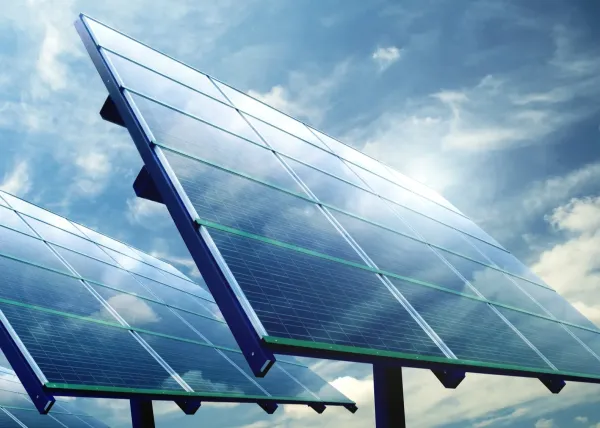
The photovoltaic industry is currently undergoing a structural change due to overcapacity, resulting in accelerated consolidation. Despite this, long-term demand remains positive. The industry will continue to diversify its applications through technological innovation and cost control.
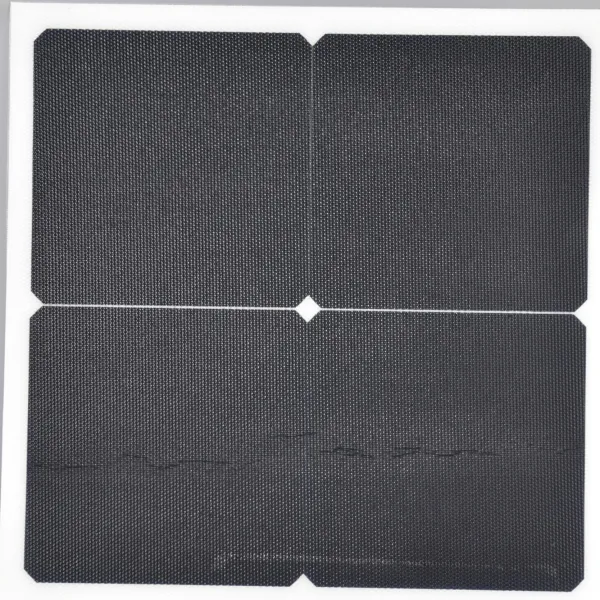
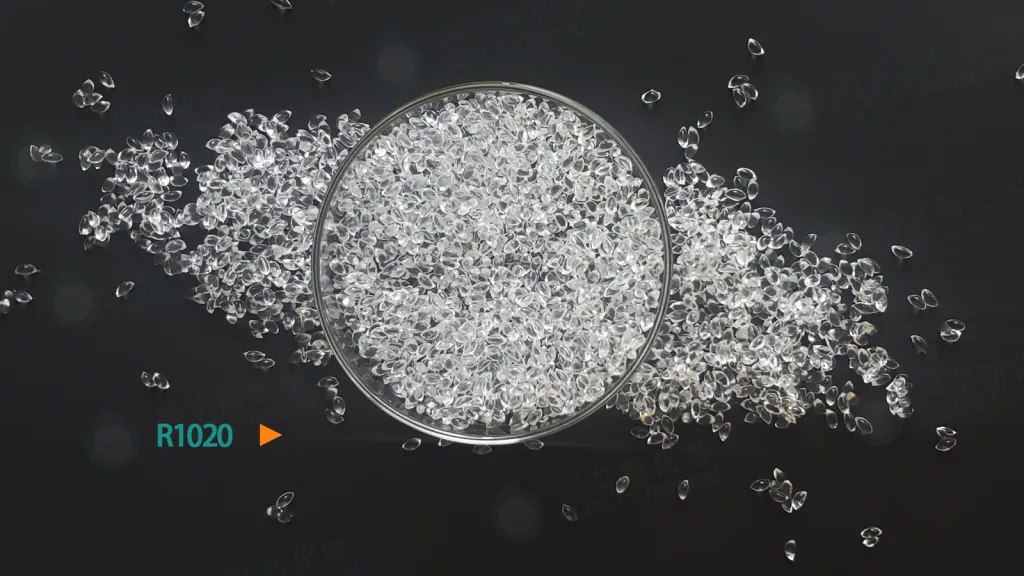
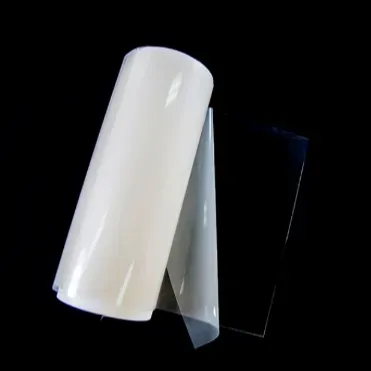
The first-generation EVA films have long dominated the market due to their established manufacturing processes and lower costs. However, their limitations in weather resistance and susceptibility to potential induced degradation (PID) have led the industry to explore better alternatives. POE encapsulation materials, known for their excellent moisture barrier properties and high resistivity, are becoming the preferred choice for high-efficiency technologies like bifacial modules and N-type batteries, significantly improving long-term reliability of components. Co-extruded POE/EVA films combine the benefits of both materials, striking a favorable balance between performance and cost, which makes it increasingly popular among manufacturers.
SABIC's FORTIFY™ PV POE films boast high volume resistivity, ensuring long-term protection for photovoltaic modules. Additionally, SABIC® PP 95MK40T backsheet material selectively blocks moisture, oxygen, and acetic acid.
Wanhua Chemical has introduced a series of solutions to boost efficiency in the new energy industry, with POE emerging as a key product. Photovoltaic encapsulation films made from WANSUPER® POE offer high moisture barrier rates, excellent weather resistance, superior transparency, and robust PID resistance.
Covestro's Baydur® polyurethane composites provide high strength, corrosion resistance, and excellent insulating properties. These advantages not only improve the performance and lifespan of solar modules but also help photovoltaic companies lessen their reliance on fluctuating aluminum prices. Furthermore, the carbon footprint of this material is 85% lower than that of traditional aluminum.
According to Japan-based Global Information, Inc. (GII), the wind turbine market is expected to grow from US$121.19 billion in 2025 to US$157.79 billion by 2030, with a compound annual growth rate of 5.42%.
Wind turbine blades are essential components that convert wind energy into mechanical energy, and directly impact the power generation capacity and economic efficiency of turbines. In China, some wind turbine blades have already exceeded 210 meters in diameter.
However, the increase in blade size brings challenges, including transportation difficulties, a higher risk of breakage, increased costs, and greater manufacturing complexity. To tackle these issues, companies are actively pursuing innovative designs, such as segmented blades and multi-rotor systems.
Wind power equipment needs sealing, insulation, and damping components that meet stringent standards for temperature resistance, corrosion resistance, and durability. DuPont™ Nomex® materials offer high-temperature insulation solutions for wind turbines and transformers, improving equipment safety, reliability, and overload resistance.
In hydrogen production, plastics and rubber materials are vital for key equipment due to their unique properties. As proton exchange membrane (PEM) electrolyzers evolve to higher power and pressure, high-performance plastics like PEEK and PEKK, along with carbon fiber-reinforced composites, are becoming the preferred materials for next-generation frames, providing metallic strength and rigidity while remaining lightweight.
Estonian manufacturer Stargate Hydrogen has leveraged BASF's Ultrason® materials to produce frames in alkaline water electrolyzer (AWE) stacks, substituting metal nickel with polysulfone to significantly reduce stack weight. This material maintains excellent high-temperature and chemical resistance, as well as compressive strength, even in highly alkaline environments, ensuring long life and low maintenance.
In alkaline electrolyzers, sealing gaskets provide both sealing and insulation functions, directly affecting system safety and operational reliability. In China, commonly used gaskets are made from PTFE, modified with fillers like fiberglass, alumina, and graphite. Key performance indicators include compressibility, elasticity, and creep relaxation. Zhejiang Conceptfe New Material Technology is one of the leading Chinese sealing gasket manufacturers. Its self-developed PTFE-modified gaskets outperform pure PTFE products in wear resistance, hardness, and self-lubrication.
Type IV hydrogen storage vessels are a key research focus, typically featuring an inner liner made from thermoplastic materials like HDPE or PA, with a thickness of about 2–3 millimeters. These materials provide excellent gas tightness and resistance to hydrogen embrittlement.
Liners made from Envalior's Durethan® and Akulon® Fuel Lock PA6 can reduce weight by up to 75% compared to steel solutions while also being more cost-effective. The single-layer blow molding process allows for valve integration into the inner liner, leading to approximately 30% savings in production costs. Besides, PA6 offers barrier properties 5 times better than HDPE, enabling thinner walls and improved hydrogen storage efficiency.
The rapid growth of the new energy industry has heightened the demands for plastics and rubber components, necessitating greater precision, more complex structures, and improved performance. This drives ongoing innovation in processing equipment and technology.
Injection molding is ideal for producing high-precision components like motor housings, connectors, insulating gaskets, and gears. ENGEL's injection molding machines feature intelligent control units for stability and precision, making them suitable for mass production of electric vehicle parts. Meanwhile, Arburg's Allrounder injection molding machines, equipped with robotic systems, can shorten the molding cycle time for connectors and enhance yield rates.
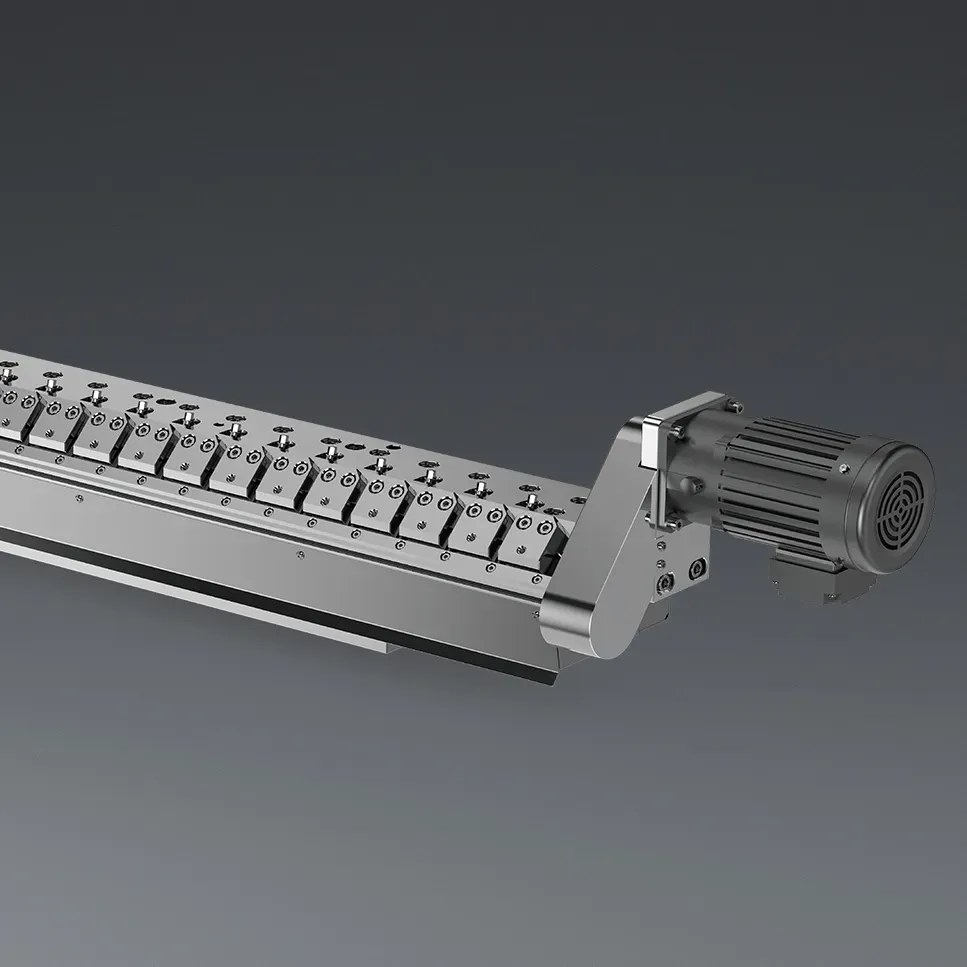
JCTIMES' high-end coating dies are extensively used in precision coating applications for solar and hydrogen energy. The company designs these dies by accounting for the rheological properties of materials and the specific onsite production conditions. By integrating simulation systems into the design process, JCTIMES achieves complete digital management, allowing for customized, high-precision solutions.
In the collaborative development of next-generation battery technologies, JCTIMES has introduced solid-state lithium battery coating dies that optimize the coating process. This enhancement improves precision and uniformity, effectively lowering production costs.
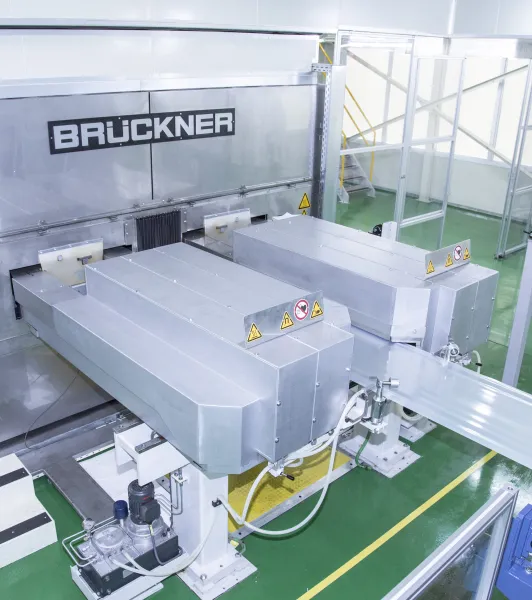
Brückner's high-output BOPP, BOPET, and BOPA film stretching lines have a working width of 10.4 meters, at a speed exceeding 600 meters per minute, and an annual output of over 60,000 metric tons. This technology reduces energy consumption, minimizes waste, lowers material usage, and decreases carbon emissions, supported by advanced digital automation control systems.
Plastics and rubber materials are evolving from a supportive role to a critical backbone in the new energy transition. They add value through cost reduction, production efficiency, system reliability, and decarbonization. As the sector advances toward higher efficiency and lower emissions, the significance of material performance and manufacturing processes will become more evident.
In the long-term development of the trillion-dollar new energy market, the plastics and rubber industry is strengthening the foundation for green energy through continuous innovation.