

Green Plastics Breaking Boundaries: From Packaging Sidekicks to Industrial Protagonists
Green technology is reshaping the boundaries of the plastics industry. It has long transcended the narrow dimensions of "biodegradable" or "recyclable," evolving into a profound transformation encompassing raw material innovation, application breakthroughs, and circular model restructuring. From castor beans entering automotive engine compartments, to chemical recycling turning waste back into high-performance raw materials; from full-nature-domain degradation putting an end to white pollution, to recycled carbon fiber achieving a green rebirth - a new industrial landscape driven by green, low-carbon, and circular principles is rapidly taking shape.
Global markets confirm this trend:
1. The bio-based materials market is expected to grow from USD 47.42 billion in 2025 to USD 57.83 billion in 2026, at a compound annual growth rate (CAGR) of 22%.
2. The bioplastics and biopolymers market is projected to increase from USD 13.83 billion in 2025 to USD 16.31 billion in 2026, with a CAGR of 18.0%.
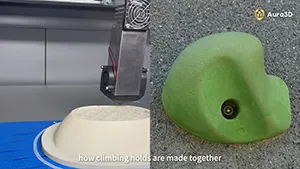
3. In China, the bio-based polyurethane market is expected to exceed RMB 8.5 billion in 2026, with a CAGR of 18.3%, while the global bio-based polyurethane market is forecast to reach USD 30.6 billion in 2026. More notably, the application boundaries of green materials are expanding significantly—they are no longer confined to packaging bags, food containers, and daily chemical product packaging, but are penetrating at an unprecedented pace into high-end manufacturing fields such as industrial 3D printing, automotive core components, building insulation, and precision electronics.
In the automotive and electronics sectors, bio-based materials are beginning to breach the "industrial heart." Wote New Materials launched Wouper® PA46, a bio-based high-temperature nylon derived from castor beans, which can operate at high speeds in 110°C oil baths while maintaining over 90% mechanical strength retention. It has been applied in gearbox bearing retainers, oil pump gears, and other core transmission components, while also excelling in ultra-thin-wall molding of precision electronic connectors. Arkema’s Rilsan® PA11 reduces carbon footprint by approximately 80% compared to conventional materials and is widely used in new energy vehicles and electronic devices.
In the field of 3D printing, green materials are moving from prototype validation to actual production. According to industry research, using recycled polymers such as rPET and rPLA for 3D printing can reduce material costs by up to 40% and cut carbon emissions by 30% compared to virgin materials. Covestro has introduced a glass-fiber-filled rPET material for 3D pellet printing, with a carbon footprint significantly lower than that of virgin materials. China Resources Chemical Materials has demonstrated the compliant application of rPET in food-contact materials, while Kingfa has achieved a recycled HDPE flake purity of 99.9% through its "AI sorting + green cleaning" process.
In the circular economy domain, chemical recycling technologies are reaching commercial breakthroughs. Lummus Technology and Sumitomo Chemical have jointly commercialized their PMMA chemical recycling technology, which is expected to reduce lifecycle greenhouse gas emissions by approximately 50%. HRC’s recycled carbon fiber materials retain over 95% of their original physical properties, with carbon emissions only 4.7% of those of virgin materials. Guoke Haina’s PDA full-nature-domain biodegradable plastic can fully degrade in marine environments without generating microplastic residues, and has been applied in marine fishery aquaculture nets and 3C electronic packaging.
When bio-based and recycled materials are no longer a "compromise" but a "better solution," a new industrial landscape driven by green technology is taking shape. From April 13 to 16, 2027, CHINAPLAS 2027, will open in Shenzhen under the new theme "Advancing a Smarter, Circular Future - As One" bringing together over 4,600 global exhibitors. Here, what you see is not mere concepts but commercial mass production; not distant visions but an ongoing industrial transformation. The breakthrough moment for green plastics will be comprehensively showcased at CHINAPLAS 2027.

Innovation Related Products
Industry News
Guangdong C1 Life Biotech Co., Ltd.
Product Details Senyth™ is a high-performance non-food bio‑based polymer and fiber brand. It uses C1 Life’s self‑developed Biebl® 1,3‑propanediol as its core raw material. The product range includes non-food bio‑based polyester PTT and fiber series, the newly launched non-food bio‑based polyester elastomer STEP and fiber series, as well as PPCT/PLA bio‑fibers and PPCTDF/PLA filling fibers. Senyth™ offers skin‑friendly softness, lasting resilience, and low‑carbon environmental benefits, making it widely used in the textile and apparel industry.Features:
1、 Made from bio‑based raw materials – more environmentally friendly.
2、 Quality assured with continuous fiber innovation.
BLUEPHA CO., LTD.
Bluepha™ PHA not only exhibits mechanical properties similar to fossil‑based plastics, but also offers excellent strength, heat resistance, barrier performance, and other outstanding characteristics. With its superior biodegradability, it can be widely applied in green packaging, tableware, cosmetics, textile fibers, and other high‑end applications.1) Passed home compostability and marine degradation tests in 2022.
2) Obtained the 100% biobased material certificate issued by TÜV Austria Group, an internationally recognized third‑party authority.
To address the diverse needs of different customers, Bluepha delivers raw materials together with tailored solutions. Its product portfolio includes custom grades for specific applications, as well as mature processing guidelines and technology packages that have been validated through mass production, complemented by technical consultations from experts with extensive hands‑on experience.
PHABUILDER
Bio-Based Polycaprolactone (Bio-PCL) This product appears as white pellets or powder, combining high crystallinity with flexibility. Its elongation at break rivals that of medium-density polyolefins, while exhibiting excellent compatibility with materials such as PLA and PEG. The product is suitable for long-term implantable medical devices such as surgical sutures, orthopedic splints, and drug delivery carriers (e.g., microspheres, nanofibers), as well as industrial applications including biodegradable packaging films and hot melt adhesives, providing solutions for green intelligent manufacturing.
ARKEMA (CHINA) INVESTMENT CO., LTD. SHANGHAI BRANCH
Arkema Advanced Bio-Circular (ABC) Materials Rilsan PA 11 is a 100% castor-derived polymer. Castor is a sustainable and renewable crop. The resulting carbon footprint of Rilsan PA11 is then significantly lowered versus comparable polymers, with up to 70% reduction when replacing conventional nylons.The Advanced Bio-Circular Materials Rilsan and Pebax Rnew series are recyclable. The Arkema Virtucycle program is a virtuous recycling program for high performance polyamides and PVDF polymers.
Arkema Advanced Bio-Circular Materials have excellent performance and can meet the extreme requirements of various applications. They are widely used in 3D printing, sports equipment, medical and health, consumer electronics, transportation and other markets.
COIM Group
High Bio-Content Biobased TPU is a novel Thermoplastic polyurethane made from renewable biobased Polyols, having much less CO2 release and optimized Carbon Footprint compared with traditional fossil based TPU. With the guarantee of qualified property, its bio-content can go up to 75%.
CJ Biomaterials
PHACT™-S1000P have heat stability and work well in conventional plastic converting process.Semi-crystalline biodegradable resin and it has excellent biodegradability under anaerobic, aerobic, aquatic and compost conditions
1) 100% Bio-content
2) TUV Certified home and industrial compostable
3) TUV Certified marine and soil biodegradable
4) High heat stability applicable to high usable temperatures
5) Anti-hydrolysis properties compared to typical biodegradable polymer
HUSKY INJECTION MOLDING SYSTEMS (SHANGHAI) LTD.
With thousands of drops processing millions of Bio Resin parts all over the globe, our experience with Bio Resin is unmatched in the industry. From complex food packaging, cutlery production to consumer goods parts, our Ultra range of hot runners, designed for BioResin applications deliver:1. Thermally balanced systems with precise temperature distribution ensures optimal melt handling
2. A variety of gating methods designed for bio-resin molding
3. Specific start-up and maintenance processes for a variety of bio-resins.
VEOLIA HUAFEI POLYMER TECHNOLOGY (ZHEJIANG) CO., LTD.
1. Compared to general recycled PET, it reaches BPA-free grade, meeting the requirements for food-grade applications. Key characteristics: BPA<0.1ppm, AA<1ppm, and Benzene <0.1ppm2. Great breakthoughes in Raw material identification and selection, bottle & flakes Decontamination and EREMA purification, online quality monitoring and final inspection, make it can be used in the food contact packaging.
3. Aligned with the food safety standards of virgin PET, it makes consumers use it more confidently.
4. It can be used in a various types of food packaging.
ZHEJIANG JIAREN NEW MATERIALS CO., LTD
Jiaren achieved large-scale production of r-DMT (Recycled Dimethyl Terephthalate), an innovative and sustainable material developed from recycled polyester. Utilizing a unique process of depolymerization, polymerization, and purification, r-DMT matches the quality of virgin materials while enhancing sustainability and performance. It’s compatible with various copolymers, producing polyester products that meet or exceed traditional material standards in strength, heat resistance, and chemical durability. r-DMT serves as a premium solution across engineering plastics, packaging, fibers, and apparel.