Please note that the auto-translation function (beta) uses the 3rd-party tool to translate contents based on the English version of the website and it may occur incorrect results sometimes.
x

2027·4·13 - 16
Shenzhen World Exhibition & Convention Center (Bao'an), PR China

Quick Links:
Top Search Exhibitor
Market News
Hyundai Motor Group Bets $700 Million on Mexico Amid Trade Policy Volatility
Publish date: 2026-05-07
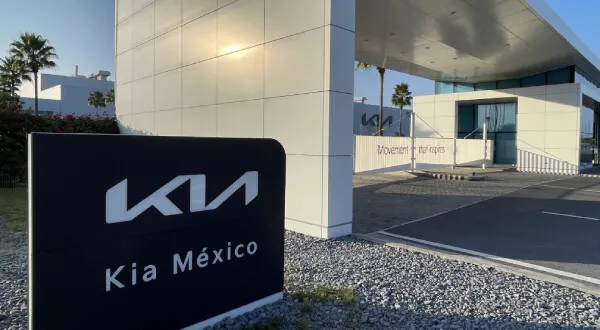
MEXICO CITY — In a bold move that defies growing geopolitical tension and fluctuating trade policies, Hyundai Motor Group (HMG) is significantly ramping up its investment in Mexico. While other global automakers are hitting the brakes on North American expansion due to looming tariff threats and the potential dismantling of green energy subsidies, the South Korean automotive giant is doubling down on its integrated supply chain" strategy.
According to industry sources and recent reports, the total investment package—led by Kia, Hyundai Mobis, and Hyundai Wia—is estimated to reach $700 million. This capital injection is designed to transform Mexico from a low-cost manufacturing hub into a high-tech nerve center for the next generation of mobility.
A Multidimensional Investment Strategy
The lion’s share of the investment, approximately $600 million (870 billion KRW), is being spearheaded by Kia. The funds are earmarked for the construction of new production lines dedicated to electric vehicles (EVs) and the establishment of eco-friendly infrastructure. This marks a pivotal shift for Kia’s Mexican operations, which have historically focused on internal combustion engine (ICE) vehicles.
However, the strategy extends far beyond simple assembly. The remaining $100 million is being distributed among key affiliates to ensure a self-sustaining ecosystem:
Hyundai Mobis & Hyundai Wia: Investing in localized production of hybrid engines, autonomous driving components, and automotive semiconductors. Hyundai Glovis: Having recently opened a massive vehicle distribution center at the Port of Lázaro Cárdenas, the logistics arm is strengthening the export pipeline to both North and South America.
The "Two-Track" Approach: US vs. Mexico
Industry analysts suggest that Hyundai’s persistence is part of a sophisticated "Two-Track" strategy. While the group focuses on domestic production within the United States to satisfy "Made in America tax credit requirements, the Mexican facilities are being repositioned to handle the complexity of the transitional market.
"Hyundai is balancing its portfolio by utilizing the U.S. for high-end EV production while leveraging Mexico for hybrid models and essential component manufacturing," says an industry consultant. "This minimizes the risk of putting all their eggs in one policy basket."
Under the USMCA (United States-Mexico-Canada Agreement), vehicles produced in Mexico can still enter the U.S. market duty-free, provided they meet strict regional value content requirements. By strengthening its local supply chain now, Hyundai is betting that it can meet these thresholds even if the rules are tightened in future negotiations.
According to industry sources and recent reports, the total investment package—led by Kia, Hyundai Mobis, and Hyundai Wia—is estimated to reach $700 million. This capital injection is designed to transform Mexico from a low-cost manufacturing hub into a high-tech nerve center for the next generation of mobility.
A Multidimensional Investment Strategy
The lion’s share of the investment, approximately $600 million (870 billion KRW), is being spearheaded by Kia. The funds are earmarked for the construction of new production lines dedicated to electric vehicles (EVs) and the establishment of eco-friendly infrastructure. This marks a pivotal shift for Kia’s Mexican operations, which have historically focused on internal combustion engine (ICE) vehicles.
However, the strategy extends far beyond simple assembly. The remaining $100 million is being distributed among key affiliates to ensure a self-sustaining ecosystem:
Hyundai Mobis & Hyundai Wia: Investing in localized production of hybrid engines, autonomous driving components, and automotive semiconductors. Hyundai Glovis: Having recently opened a massive vehicle distribution center at the Port of Lázaro Cárdenas, the logistics arm is strengthening the export pipeline to both North and South America.
The "Two-Track" Approach: US vs. Mexico
Industry analysts suggest that Hyundai’s persistence is part of a sophisticated "Two-Track" strategy. While the group focuses on domestic production within the United States to satisfy "Made in America tax credit requirements, the Mexican facilities are being repositioned to handle the complexity of the transitional market.
"Hyundai is balancing its portfolio by utilizing the U.S. for high-end EV production while leveraging Mexico for hybrid models and essential component manufacturing," says an industry consultant. "This minimizes the risk of putting all their eggs in one policy basket."
Under the USMCA (United States-Mexico-Canada Agreement), vehicles produced in Mexico can still enter the U.S. market duty-free, provided they meet strict regional value content requirements. By strengthening its local supply chain now, Hyundai is betting that it can meet these thresholds even if the rules are tightened in future negotiations.
Source: Global Economic Times