Please note that the auto-translation function (beta) uses the 3rd-party tool to translate contents based on the English version of the website and it may occur incorrect results sometimes.
x

2027·4·13 - 16
Shenzhen World Exhibition & Convention Center (Bao'an), PR China

Quick Links:
Top Search Exhibitor
Market News
Indonesia’s car market is having its best sales month in years, but manufacturers are terrified because their plastic supply
Publish date: 2026-05-11
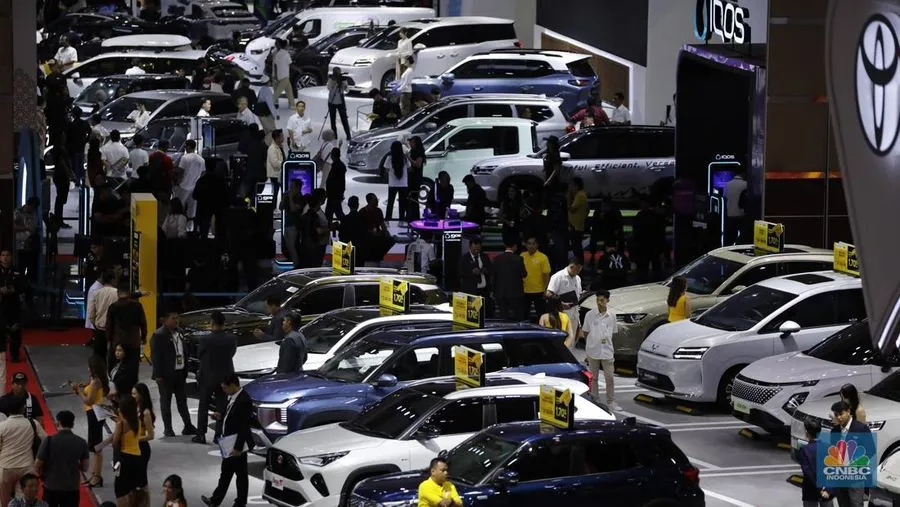
The Indonesian automotive industry is currently navigating a sharp paradox: consumer demand has reached record highs, yet manufacturers are facing an existential threat due to a global shortage of plastic raw materials.
According to the latest data from GAIKINDO (the Association of Indonesian Automotive Industries), national car sales in April 2026 hit 80,776 units, marking a staggering 55% year-on-year (YoY) increase. This surge reflects a robust domestic appetite for new vehicles. However, this success is overshadowed by severe supply chain disruptions triggered by escalating global geopolitical tensions.
The crisis has shifted from the previous years' semiconductor shortage to a critical lack of petroleum-based plastic components, which are essential for modern vehicle assembly. GAIKINDO’s Secretary General, Kukuh Kumara, warns that most domestic manufacturers are currently operating on limited ""buffer stocks"" that are only expected to last for two to three months.
To mitigate the risk of a total production standstill, Indonesian automakers are aggressively pursuing a "multi-sourcing strategy, seeking alternative vendors to diversify their supply chains. Despite these efforts, the industry remains highly vulnerable.
While the sales data suggests a golden era for the Indonesian market, the sustainability of this growth depends entirely on global stability. If geopolitical tensions do not ease within the next quarter, the industry faces the grim prospect of production halts and long customer waiting lists, potentially stifling the momentum of the national economic recovery.
According to the latest data from GAIKINDO (the Association of Indonesian Automotive Industries), national car sales in April 2026 hit 80,776 units, marking a staggering 55% year-on-year (YoY) increase. This surge reflects a robust domestic appetite for new vehicles. However, this success is overshadowed by severe supply chain disruptions triggered by escalating global geopolitical tensions.
The crisis has shifted from the previous years' semiconductor shortage to a critical lack of petroleum-based plastic components, which are essential for modern vehicle assembly. GAIKINDO’s Secretary General, Kukuh Kumara, warns that most domestic manufacturers are currently operating on limited ""buffer stocks"" that are only expected to last for two to three months.
To mitigate the risk of a total production standstill, Indonesian automakers are aggressively pursuing a "multi-sourcing strategy, seeking alternative vendors to diversify their supply chains. Despite these efforts, the industry remains highly vulnerable.
While the sales data suggests a golden era for the Indonesian market, the sustainability of this growth depends entirely on global stability. If geopolitical tensions do not ease within the next quarter, the industry faces the grim prospect of production halts and long customer waiting lists, potentially stifling the momentum of the national economic recovery.
Source: CNBC Indonesia