Please note that the auto-translation function (beta) uses the 3rd-party tool to translate contents based on the English version of the website and it may occur incorrect results sometimes.
x

2027·4·13 - 16
Shenzhen World Exhibition & Convention Center (Bao'an), PR China

Quick Links:
Top Search Exhibitor
Market News
Nigeria Tightens War on Plastic Waste, Makes Producers Responsible for End of Life Products
Publish date: 2026-09-14
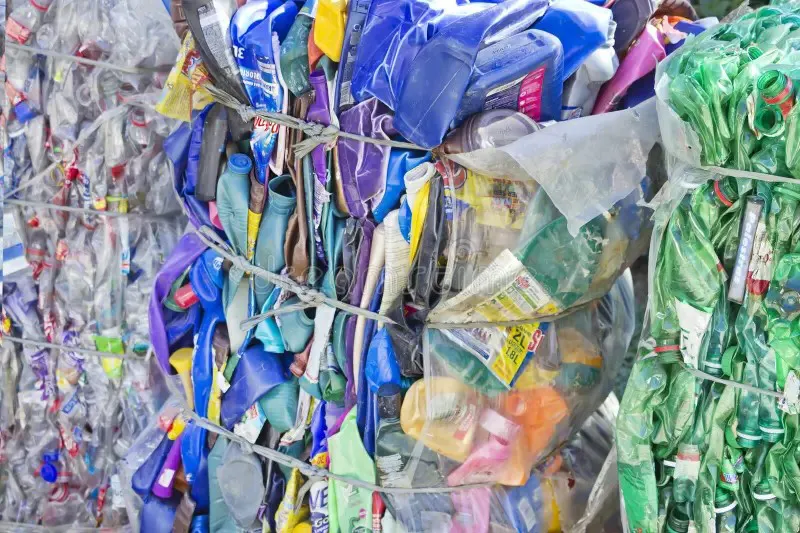
The federal government has unveiled new regulations to tackle Nigeria’s growing plastic waste crisis, placing greater responsibility on producers, importers and other businesses for the recovery and proper management of plastic products after use. JoinDiaspora Networks
The National Environmental (Plastic Waste Control) Regulations, 2026, unveiled by the National Environmental Standards and Regulations Enforcement Agency (NESREA), seek to move the country from a “make, use and throw away” system to a circular economy based on recovery, recycling and resource efficiency.
Nigeria generates an estimated 2.5 million tonnes of plastic waste annually, much of which ends up in drains, waterways and communities, contributing to environmental degradation, flooding and public health concerns.
Speaking at the Stakeholder Implementation Dialogue and inaugural multi-stakeholder roundtable on "Less Plastic in Water,"" the Director-General of NESREA, Prof. Innocent Barikor, said the regulations marked a shift from policy formulation to implementation.
“Today is significant because it marks a transition from policy intention to implementation,” he said.
Barikor said the success of the regulations would ultimately be measured by cleaner communities and waterways, increased plastic recovery, stronger recycling markets and greater accountability by producers.
At the centre of the new framework is the Extended Producer Responsibility (EPR) principle, under which producers, importers and other businesses placing plastic products on the Nigerian market are expected to take responsibility for their products throughout their life cycle, including their recovery and environmentally sound management after use.
The regulations cover producers, importers, retailers, consumers, recyclers and waste managers, while introducing requirements relating to plastic shopping bags, recycled content and recycling facilities.
Certain plastic shopping bags below 80 microns in thickness are subject to regulation, while PET packaging will be required to contain at least 25 per cent recycled PET by January 2028, rising to 50 per cent thereafter.Recycling facilities must also comply with prescribed environmental standards, while the production of plastics containing prohibited toxic substances will attract sanctions.
Businesses operating within regulated activities are required to obtain the necessary permits and registrations within the stipulated compliance period. Violations may attract financial penalties and, where applicable, imprisonment and personal liability.
The National Environmental (Plastic Waste Control) Regulations, 2026, unveiled by the National Environmental Standards and Regulations Enforcement Agency (NESREA), seek to move the country from a “make, use and throw away” system to a circular economy based on recovery, recycling and resource efficiency.
Nigeria generates an estimated 2.5 million tonnes of plastic waste annually, much of which ends up in drains, waterways and communities, contributing to environmental degradation, flooding and public health concerns.
Speaking at the Stakeholder Implementation Dialogue and inaugural multi-stakeholder roundtable on "Less Plastic in Water,"" the Director-General of NESREA, Prof. Innocent Barikor, said the regulations marked a shift from policy formulation to implementation.
“Today is significant because it marks a transition from policy intention to implementation,” he said.
Barikor said the success of the regulations would ultimately be measured by cleaner communities and waterways, increased plastic recovery, stronger recycling markets and greater accountability by producers.
At the centre of the new framework is the Extended Producer Responsibility (EPR) principle, under which producers, importers and other businesses placing plastic products on the Nigerian market are expected to take responsibility for their products throughout their life cycle, including their recovery and environmentally sound management after use.
The regulations cover producers, importers, retailers, consumers, recyclers and waste managers, while introducing requirements relating to plastic shopping bags, recycled content and recycling facilities.
Certain plastic shopping bags below 80 microns in thickness are subject to regulation, while PET packaging will be required to contain at least 25 per cent recycled PET by January 2028, rising to 50 per cent thereafter.Recycling facilities must also comply with prescribed environmental standards, while the production of plastics containing prohibited toxic substances will attract sanctions.
Businesses operating within regulated activities are required to obtain the necessary permits and registrations within the stipulated compliance period. Violations may attract financial penalties and, where applicable, imprisonment and personal liability.
Source: This Day