Please note that the auto-translation function (beta) uses the 3rd-party tool to translate contents based on the English version of the website and it may occur incorrect results sometimes.
x

2027·4·13 - 16
Shenzhen World Exhibition & Convention Center (Bao'an), PR China

Quick Links:
Top Search Exhibitor
Market News
Japan's Recycling Law Became a Filing Obligation in April 2026. Manufacturers Now Submit Recycled-Content Plans.
Publish date: 2026-09-04
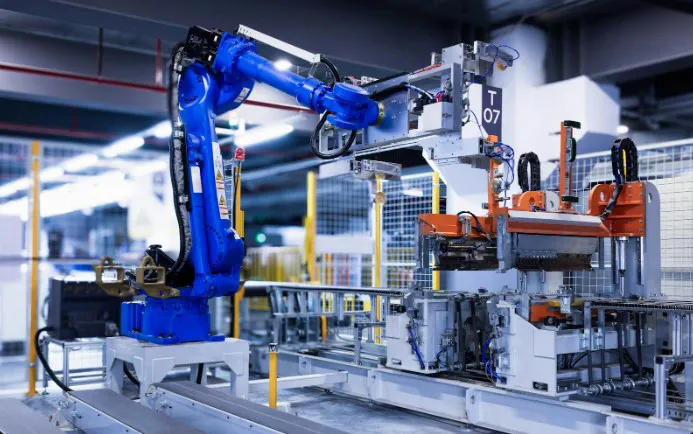
The newly updated regulatory framework under Japan’s amended Act on the Promotion of Effective Utilization of Resources marks a monumental shift in the nation’s approach to industrial environmental sustainability and corporate accountability. By transitioning from historical, entirely voluntary eco-design guidelines to strictly enforceable legal filings and mandatory reporting obligations, the Japanese government is actively forcing large-scale domestic manufacturers to take comprehensive responsibility for their entire material lifecycles. Spearheaded by joint task forces from the Ministry of the Environment and the Ministry of Economy, Trade, and Industry (METI), this aggressive policy push acts as a direct intervention following data indicating that Japan is falling significantly short of its targeted 2030 resource circularity milestones. Under these newly enacted compliance structures, prominent market players are legally required to submit highly detailed, long-term resource-circulation blueprints to competent state authorities, effectively redefining the mandatory baseline requirements for corporate operational safety within the domestic consumer market.
A primary driving force behind this unprecedented legislative escalation is the severe, ongoing structural crisis within Japan's plastic supply chains, compounded by a heavy historical dependence on imported chemical feedstocks. Currently, up to seventy percent of the foundational naphtha required to produce virgin plastics inside Japanese factories must be procured from volatile international markets, exposing domestic brands to sudden geopolitical supply disruptions and extreme pricing shocks. Compounding this resource vulnerability is the heavily fragmented and technologically limited state of local reprocessing infrastructure, where historically less than five percent of total plastic waste has been successfully upcycled back into premium, food-grade materials. To shatter these systemic bottlenecks and achieve true resource autonomy, the state is injecting massive capital subsidies into automated plastic reprocessing mega-facilities that leverage advanced machine vision, near-infrared spectroscopy, and robotic sorting to permanently stabilize raw material costs and guarantee consistent chemical purity for industrial buyers.
A primary driving force behind this unprecedented legislative escalation is the severe, ongoing structural crisis within Japan's plastic supply chains, compounded by a heavy historical dependence on imported chemical feedstocks. Currently, up to seventy percent of the foundational naphtha required to produce virgin plastics inside Japanese factories must be procured from volatile international markets, exposing domestic brands to sudden geopolitical supply disruptions and extreme pricing shocks. Compounding this resource vulnerability is the heavily fragmented and technologically limited state of local reprocessing infrastructure, where historically less than five percent of total plastic waste has been successfully upcycled back into premium, food-grade materials. To shatter these systemic bottlenecks and achieve true resource autonomy, the state is injecting massive capital subsidies into automated plastic reprocessing mega-facilities that leverage advanced machine vision, near-infrared spectroscopy, and robotic sorting to permanently stabilize raw material costs and guarantee consistent chemical purity for industrial buyers.
Source: Tech for Impact Summit