Please note that the auto-translation function (beta) uses the 3rd-party tool to translate contents based on the English version of the website and it may occur incorrect results sometimes.
x

2027·4·13 - 16
Shenzhen World Exhibition & Convention Center (Bao'an), PR China

Quick Links:
Top Search Exhibitor
Top Search Product Category
Quick Overview
1
South Korea’s domestic plastics and rubber market is expected to grow from USD 14.25 billion to USD 19.94 billion by 2034, representing a compound annual growth rate (CAGR) of 3.80%.
2
The plastics market growth is driven by strategic pivots toward engineering plastics, advanced recycling technologies, and bio-based materials.
3
The packaging sector, which accounts for 42% of total plastics consumption, is undergoing a fundamental transformation fueled by the landmark label-free mandate and circular economy requirements.
4
Under the Korean government’s Circular Economy Action Plan, policies such as the rPET Mandate and the Korean-Style Eco-Design Framework are accelerating industry change.
5
Meeting stringent recycled-content mandates requires technological advancements in chemical recycling and smart manufacturing across the recycling value chain.
6
The Biodegradable Plastics Industry Promotion Act was introduced to establish a systematic framework for developing the biodegradable plastics sector.
The South Korea's plastics and rubber industries stands at a transformative crossroads in 2026, executing a fundamental restructuring from a traditional volume-centric petrochemical hub to a high-value, sustainability-driven ecosystem. It is supported by strong demand from the automotive, electronics, packaging, and industrial manufacturing sectors, and benefits from lightweight materials used in electric vehicles (EVs), consumer electronics, and advanced packaging solutions.
Market Growth Driven by Strategic Transformation
With a domestic market valuation of USD 14.25 billion projected to reach USD 19.94 billion by 2034, the industry is experiencing growth driven not by volume expansion but by strategic pivots towards engineering plastics, advanced recycling technologies, and bio-based materials. This transformation is catalyzed by aggressive government policies, technological innovation, and the imperative to address Korea's challenging environmental profile as the second-highest per capita plastic waste generator at 103.9 kilograms per person annually within the Organisation for Economic Co-operation and Development (OECD).
The Korean government has established an ambitious framework targeting 30% plastic waste reduction by 2030 through comprehensive circular economy initiatives. These policies create guaranteed domestic demand for recycled materials while fundamentally reshaping production economics through eco-design incentives and mandatory recycled content requirements. The industry's response demonstrates remarkable adaptability, with major petrochemical firms voluntarily reducing naphtha-cracking capacity by 2.7 million tons to 3.7 million tons annually while simultaneously investing in specialty chemicals and advanced recycling infrastructure.
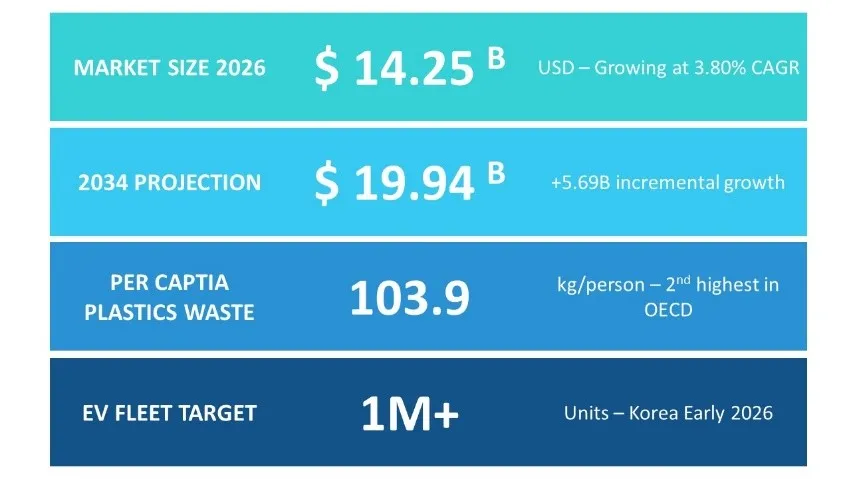
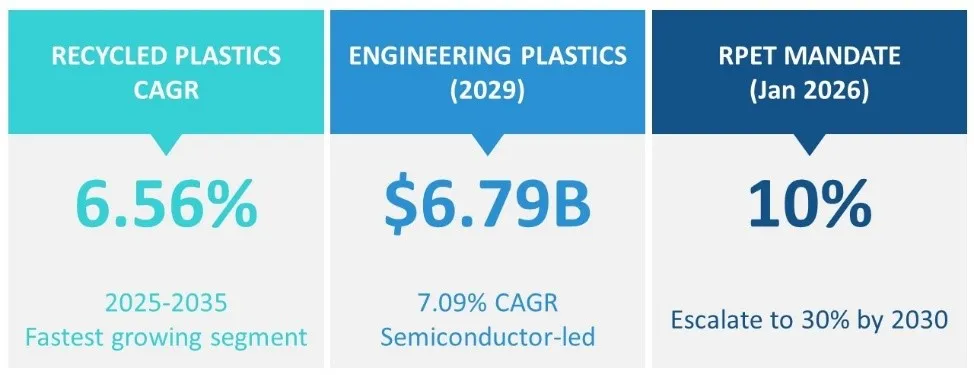
Figure 1: South Korea Plastics Industry Key Metrics Dashboard
Source: Expert Market Research, Ministry of Environment ROK, Mordor Intelligence © 2025-2026
Market Dynamics and Economic Context
The plastics market is growing at a compound annual growth rate (CAGR) of 3.80% between 2026 to 2034, with the recycled plastics segment expanding even faster at 6.56% CAGR over 2025-2035. Engineering plastics, driven by electronics and automotive applications, are projected to reach USD 6.79 billion by 2029, growing at 7.09% CAGR. This growth trajectory reflects fundamental market restructuring where value creation stems from three primary drivers: high-performance engineering plastics commanding premium pricing for electric vehicle and semiconductor applications; bio-based and recycled content materials benefiting from regulatory mandates and consumer preferences; and specialized chemical recycling technologies enabling circular material flows previously unachievable through mechanical processing alone.
The Korean petrochemical sector has undertaken strategic capacity rationalization in response to global supply glut and intensified regional competition, particularly from Chinese manufacturers leveraging scale economies and Middle Eastern producers benefiting from advantaged feedstock costs. Ten major South Korean petrochemical firms collectively reduced production capacity, signaling the industry's pivot from commodity resin production towards specialty chemicals and advanced materials where technical specifications justify premium pricing. Additionally, the government's decision to exclude thermal recycling (incineration) from official recycling statistics, while initially lowering reported performance, creates significant impetus for material recycling technology investments and infrastructure development.
Sectoral Transformation and Application Markets
Packaging Sector Revolution: Representing 42% of total plastics consumption, the packaging sector is undergoing fundamental transformation driven by the landmark label-free mandate and circular economy requirements. Effective January 1, 2026, the Ministry of Climate, Energy and Environment prohibited plastic labels on all bottled water products, requiring essential product information to be permanently printed or engraved on bottles or caps, with supplementary consumer information accessible via QR codes. This initiative eliminates 2,270 tonnes of plastic waste annually while improving recycling efficiency by eliminating adhesive residue contamination that compromises material quality.
The regulation has catalyzed demand for precision marking technologies including UV and fiber laser coders capable of marking transparent PET without structural damage, and high-contrast, durable QR code inkjet printers for bottle caps. Suppliers offering modular, retrofit-compatible units for existing Form-Fill-Seal production lines have gained competitive advantage. Beyond label-free mandates, the industry is transitioning towards mono-material designs to facilitate mechanical recycling, replacing multi-layer flexible packaging with single-polymer alternatives that maintain barrier properties through coextrusion and surface treatment rather than lamination of incompatible materials.
Automotive and Mobility Innovation: The automotive sector accounts for 18% of plastics consumption and is experiencing transformative demand driven by electric vehicle adoption. Korea's Electric vehicle (EV) fleet is projected to reach 1 million units in 2026, creating unprecedented demand for specialized polymers. EV manufacturers prioritize weight reduction to maximize battery range, utilizing transparent polypropylene compounds for sensor-integrated exterior panels and high-performance polymers for battery housings requiring superior thermal management and flame resistance. Hyundai Motor's KRW 930 billion hydrogen fuel cell plant in Ulsan, scheduled for 2027 completion, will mass-produce Polymer Electrolyte Membrane (PEM) electrolyzers relying on advanced fluoropolymers and specialized rubber seals capable of withstanding high-purity hydrogen environments under extreme conditions.
Electronics and Semiconductor Applications: The electronics and electrical sector represents 15% of consumption but commands disproportionate value due to stringent material specifications. Korea's dominance in semiconductors and IoT devices has pushed the engineering plastics market towards USD 6.79 billion by 2029. Critical applications include high-purity polymers for wafer handling in semiconductor manufacturing, chemical-resistant materials for process equipment, ultra-clean room construction materials, high-frequency dielectric materials for 5G infrastructure, flame-retardant enclosures meeting UL 94 V-0 standards, and thermally conductive but electrically insulating compounds for heat dissipation in AI servers and data centers.
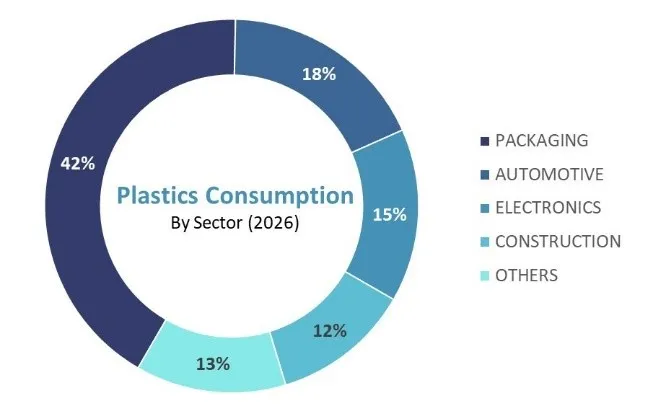
Figure 2: Plastics consumption by sector (2026)
Source: Expert Market Research, Ministry of Environment ROK, Mordor Intelligence © 2025-2026
Government Policy and Regulatory Framework
The Korean government's Circular Economy Action Plan establishes the most aggressive plastic waste reduction targets among developed economies. Two interconnected policy mechanisms drive industry transformation:
The rPET Mandate: Effective January 1, 2026, beverage producers using over 5,000 tonnes of PET annually must incorporate at least 10% recycled PET (rPET) in their bottles, escalating to 30% by 2030. This baseline requirement creates guaranteed domestic demand for recycled materials while driving investment in collection, sorting, and reprocessing infrastructure. Meeting food-grade rPET specifications requires decontamination processes achieving FDA and EU equivalency, prompting Korean processors to invest in super-clean recycling technologies including solvent-based decontamination and solid-state polymerization to restore intrinsic viscosity to virgin-equivalent levels. The mandate has created price premiums for post-consumer PET, with food-grade rPET trading at 110%-130% of virgin PET pricing as of early 2026, though this arbitrage is expected to normalize as production capacity expands through 2027-2028.
Korean-Style Eco-Design Framework: The government has implemented comprehensive eco-design criteria applying economic incentives and penalties based on recyclability assessments. Products deemed difficult to recycle face Extended Producer Responsibility (EPR) fee surcharges up to 30%, including multi-material laminated packaging, black plastics interfering with optical sorting, and products using problematic adhesives. Conversely, highly recyclable designs receive EPR fee reductions up to 50%, with qualifying criteria including mono-material construction, minimal colorants, water-soluble adhesives, and standardized formats compatible with automated sorting systems. The Korea Environment Corporation (K-eco) administers the assessment and certification process, evaluating products on material composition, separation difficulty, infrastructure compatibility, and contamination potential.
Technology Solutions and Industry 4.0 Integration
Meeting stringent recycled content mandates requires technological advancement across the recycling value chain. Korean facilities are deploying AI-based optical sorting systems achieving 99.9% accuracy to separate food-contact materials from technical and contaminated streams. These systems utilize near-infrared (NIR) spectroscopy identifying polymer types based on molecular absorption signatures at sorting speeds exceeding 3 meters per second, machine vision with deep learning recognizing bottle shape, color, and contamination patterns, and X-ray fluorescence (XRF) detection identifying bottles containing hazardous additives or heavy metal-based colorants requiring separate handling.
Chemical Recycling Innovation: Traditional mechanical recycling suffers from quality degradation through chain scission and contamination accumulation, limiting recycled content percentage in demanding applications. Chemical recycling technologies break polymers to monomers or oligomers, enabling infinite recycling loops. Pyrolysis systems thermally decompose mixed plastic waste at 400°C -800°C in oxygen-free environments, yielding synthetic crude oil suitable for naphtha crackers, effectively closing the loop for materials previously destined for incineration.
SK Chemicals is launching its Recycle Innovation Centre (RIC) pilot facility in Ulsan in 2026, focusing on glycolysis-based PET depolymerization. This process chemically breaks PET polymer chains into bis(2-hydroxyethyl) terephthalate (BHET) monomer, which is then repurified and repolymerized to produce virgin-equivalent material suitable for food contact applications. The Korea Institute of Machinery & Materials (KIMM) is demonstrating plasma-based recycling technology capable of processing mixed plastics without pre-sorting requirements. Plasma gasification converts polymers to synthesis gas (syngas), serving as feedstock for Fischer-Tropsch synthesis or methanol production, enabling valorization of difficult-to-recycle mixed waste streams.
Smart Manufacturing: Korean plastics manufacturers are adopting Industry 4.0 technologies to address labor shortages and optimize material utilization. Leading facilities utilize digital twins, virtual replicas of production lines, enabling simulation of material formulation changes and process parameter adjustments before physical implementation, reducing trial costs and material waste. Inline NIR spectroscopy monitors melt quality during extrusion and injection molding, enabling immediate process corrections to maintain specification compliance. Integration of collaborative robots (Cobots) for material loading, quality inspection, and packaging operations addresses workforce constraints while improving ergonomics and safety.
Biodegradable Plastics Industry Promotion Act
In November 2025, the National Assembly introduced comprehensive legislation establishing a systematic framework for biodegradable plastics industry development. The Biodegradable Plastics Industry Promotion Act represents strategic policy initiative positioning Korea as a global leader in bio-based materials. The Act defines biodegradable plastics as polymers manufactured from biomass or petroleum-based materials that ultimately decompose into water and carbon dioxide or methane through microbial action under specific degradation conditions including composting, natural soil, and marine environments.
The Minister of Trade, Industry and Energy shall establish and implement a five-year Basic Plan encompassing policy direction and objectives, product development and utilization promotion, technology development and dissemination, and professional workforce cultivation. A Biodegradable Plastics Industry Promotion Committee deliberates on Basic Plan formulation, execution performance review, and system modifications. Support mechanisms include government-funded technology development research, international cooperation initiatives, preferential procurement by government entities, quality mark certification administered through specialized agencies, tax incentives, pre-clearance customs release for research materials, and professional workforce development through designated universities and research institutions.
Strategic Outlook and Investment Priorities
Several convergent trends will sustain market growth through 2035. Mandatory recycled content requirements create guaranteed domestic demand for recycling infrastructure and technology, supporting investment economics for advanced sorting and chemical recycling facilities. Electric vehicle expansion drives demand for lightweight engineering plastics, specialized battery materials, and hydrogen infrastructure components including fluoropolymer membranes and high-pressure seals. Korea's semiconductor manufacturing dominance ensures sustained demand for ultra-high-purity materials and specialized process equipment components. Korean recycling technologies and high-performance materials designed for circular economy requirements position domestic producers advantageously for European and North American markets implementing similar regulatory frameworks.
Strategic technology investment priorities include advanced recycling technologies enabling infinite recycling loops and virgin-equivalent quality; bio-based polymers with performance characteristics matching petrochemical equivalents, supported by the Biodegradable Plastics Industry Promotion Act framework; smart manufacturing integration with digital systems, AI-based quality control, and automation addressing labor constraints while improving efficiency; and specialty polymers for demanding applications including semiconductor manufacturing, EV components, and 5G infrastructure.
Driven by the ongoing transformation of South Korea’s plastics and rubber industries, the growing demand for cutting-edge equipment, advanced materials, and innovative technological solutions has propelled the country to become the one of the largest sources of overseas visitors for CHINAPLAS. Participating in this premier international trade fair and its concurrent events offers South Korean visitors’ strategic opportunities to source advanced processing machinery, establish technology partnerships, and unlock export channels for domestic recycling technologies. From a trade policy perspective, key priorities include leveraging existing Free Trade Agreements (FTAs) to streamline equipment imports and material exports, securing technology licensing agreements for advanced recycling processes, and participating in international standardization initiatives to ensure global recognition of Korea's eco-design standards.
Source: South Korea's Plastics Industry Comprehensive Industry Report 2026, compiled by Mr. Charles Chong of Platopia for CHINAPLAS. (Read Full Report, English only)
About CHINAPLAS 2027
CHINAPLAS 2027, the world's leading plastics and rubber exhibition, is returning to the Shenzhen World Exhibition & Convention Center (Bao'an), PR China on April 13-16, 2027. Embarking on a new journey under the theme “Advancing a Smarter, Circular Future - As One,” the exhibition will convene over 4,700 international exhibitors across the exhibition area of 390,000 sqm, focusing on the core propositions of intelligent innovation, green upgrading, and stronger supply chain resilience in the plastics and rubber industries.
Visitor Pre-registration for CHINAPLAS 2027 is officially open! Click HERE to pre-register for an admission ticket at the early bird rate of RMB 50 / USD 7.5 (original price: RMB 80 / USD 12). Visitors will receive an eConfirmation letter (Hong Kong/Taiwan/Macau region of China and overseas visitors) upon completion of pre-registration.
Besides the show days, the exhibition also enables buyers to connect with thousands of materials and machines suppliers all year round via CPS+ eMarketplace, a smart, efficient, integrated, and sustainable online sourcing platform which is complementary to the physical show of CHINAPLAS.
For more information, please visit: ChinaplasOnline.com.