
 Green Plastics Breaking Boundaries: From Packaging Sidekicks to Industrial Protagonists
Green technology is reshaping the boundaries of the plastics industry. It has long transcended the narrow dimensions of "biodegradable" or "recyclable," evolving into a profound transformation encompassing raw material innovation, application breakthroughs, and circular model restructuring. From castor beans entering automotive engine compartments, to chemical recycling turning waste back into high-performance raw materials; from full-nature-domain degradation putting an end to white pollution, to recycled carbon fiber achieving a green rebirth - a new industrial landscape driven by green, low-carbon, and circular principles is rapidly taking shape.
Global markets confirm this trend:
1. The bio-based materials market is expected to grow from USD 47.42 billion in 2025 to USD 57.83 billion in 2026, at a compound annual growth rate (CAGR) of 22%.
2. The bioplastics and biopolymers market is projected to increase from USD 13.83 billion in 2025 to USD 16.31 billion in 2026, with a CAGR of 18.0%.
3. In China, the bio-based polyurethane market is expected to exceed RMB 8.5 billion in 2026, with a CAGR of 18.3%, while the global bio-based polyurethane market is forecast to reach USD 30.6 billion in 2026.
More notably, the application boundaries of green materials are expanding significantly—they are no longer confined to packaging bags, food containers, and daily chemical product packaging, but are penetrating at an unprecedented pace into high-end manufacturing fields such as industrial 3D printing, automotive core components, building insulation, and precision electronics.
In the automotive and electronics sectors, bio-based materials are beginning to breach the "industrial heart." Wote New Materials launched Wouper® PA46, a bio-based high-temperature nylon derived from castor beans, which can operate at high speeds in 110°C oil baths while maintaining over 90% mechanical strength retention. It has been applied in gearbox bearing retainers, oil pump gears, and other core transmission components, while also excelling in ultra-thin-wall molding of precision electronic connectors. Arkema’s Rilsan® PA11 reduces carbon footprint by approximately 80% compared to conventional materials and is widely used in new energy vehicles and electronic devices.
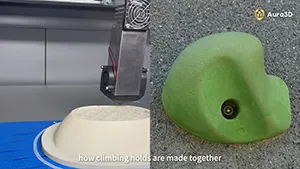
In the field of 3D printing, green materials are moving from prototype validation to actual production. According to industry research, using recycled polymers such as rPET and rPLA for 3D printing can reduce material costs by up to 40% and cut carbon emissions by 30% compared to virgin materials. Covestro has introduced a glass-fiber-filled rPET material for 3D pellet printing, with a carbon footprint significantly lower than that of virgin materials. China Resources Chemical Materials has demonstrated the compliant application of rPET in food-contact materials, while Kingfa has achieved a recycled HDPE flake purity of 99.9% through its "AI sorting + green cleaning" process.
In the circular economy domain, chemical recycling technologies are reaching commercial breakthroughs. Lummus Technology and Sumitomo Chemical have jointly commercialized their PMMA chemical recycling technology, which is expected to reduce lifecycle greenhouse gas emissions by approximately 50%. HRC’s recycled carbon fiber materials retain over 95% of their original physical properties, with carbon emissions only 4.7% of those of virgin materials. Guoke Haina’s PDA full-nature-domain biodegradable plastic can fully degrade in marine environments without generating microplastic residues, and has been applied in marine fishery aquaculture nets and 3C electronic packaging.
When bio-based and recycled materials are no longer a "compromise" but a "better solution," a new industrial landscape driven by green technology is taking shape. From April 13 to 16, 2027, CHINAPLAS 2027, will open in Shenzhen under the new theme "Advancing a Smarter, Circular Future - As One" bringing together over 4,600 global exhibitors. Here, what you see is not mere concepts but commercial mass production; not distant visions but an ongoing industrial transformation. The breakthrough moment for green plastics will be comprehensively showcased at CHINAPLAS 2027.
 Related Products
Related Videos